

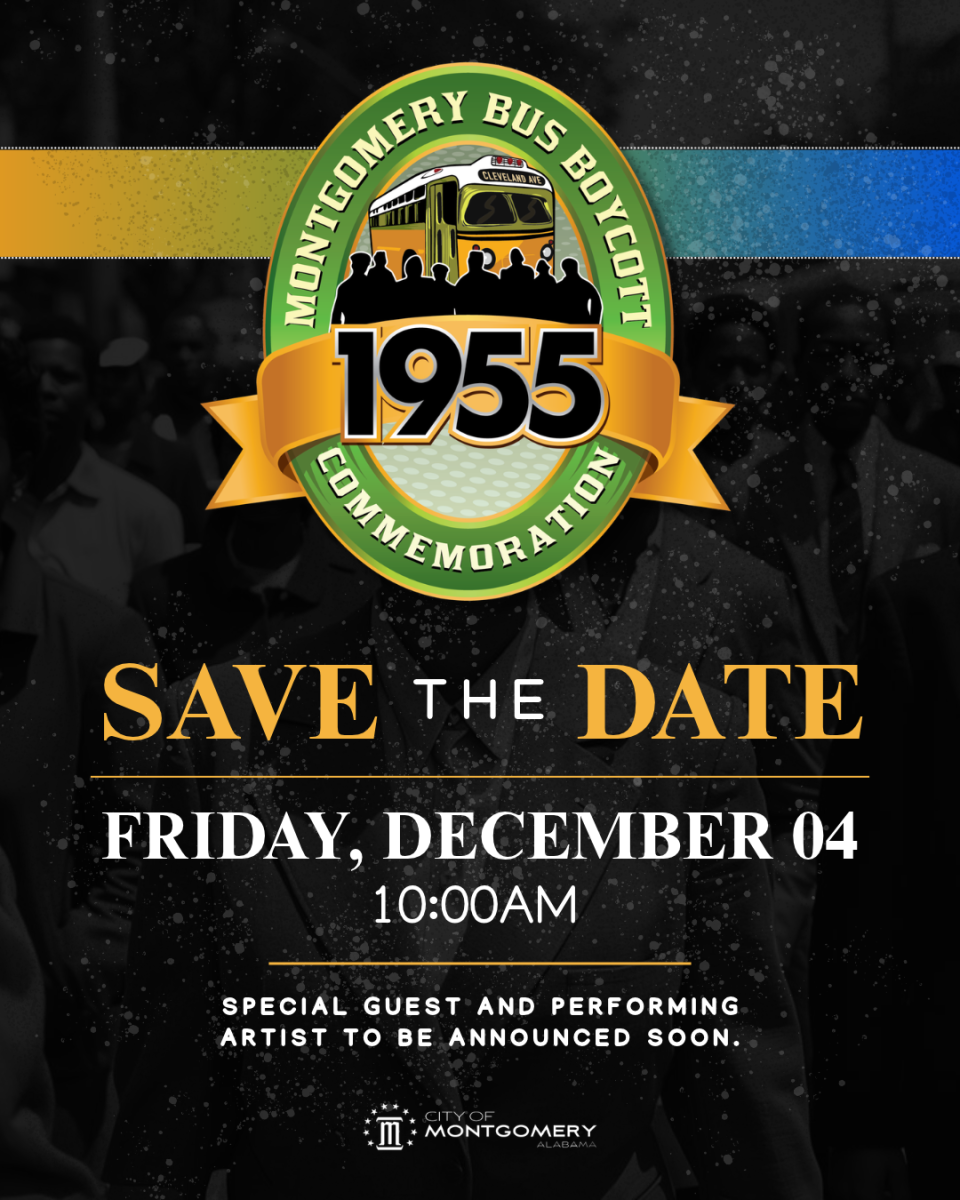
Montgomery Bus Boycott Commemoration
From Protest to Progress: The Work Continues
In December 1955, Montgomery became the center of a movement that changed American history. What began as a protest against segregation on city buses grew into a powerful demonstration of courage, unity, and collective action that helped shape the Civil Rights Movement.
Today, Montgomery continues to honor the people who made that change possible while recognizing that their legacy lives on through each new generation.
Join us for the 2026 Montgomery Bus Boycott Commemoration as we reflect on the movement's lasting impact and the work that continues.
2026 Montgomery Bus Boycott Commemoration
Friday, December 4, 2026 | 10:00 AM
Holt Street Memorial Baptist Church
1870 S. Court Street
Montgomery, Alabama
The City of Montgomery invites residents and visitors to gather to remember the Montgomery Bus Boycott and the individuals whose courage helped transform a nation.
This year's commemoration brings generations together through messages, music, and reflection, honoring the movement's legacy while encouraging young people to recognize their own ability to lead, serve, and create meaningful change.
The gathering returns to the historic church where thousands assembled on December 5, 1955, and committed to continuing the boycott, making it a meaningful setting to reflect on how far the movement has come and the work that remains.
Free and open to the public.
Additional program details, including special guest and performing artist announcements, will be shared as they become available.
Explore the History. Understand the Legacy.
Montgomery's role in the Civil Rights Movement extends beyond history books. Throughout the city, museums, historic churches, and landmarks preserve the stories of the people and places that shaped the fight for equality.
From the legacy of Rosa Parks to the organizing efforts of the Montgomery Improvement Association, visitors can discover the history of a movement built on the extraordinary actions of everyday people.
Explore Montgomery's civil rights landmarks and discover the stories that continue to inspire generations.

Did You Know?
Over 40,000 Black residents of Montgomery participated in the Bus Boycott, walking for more than a year to demand change.
Milestones of the Montgomery Bus Boycott
- Rosa Parks’ arrest on December 1, 1955
- Launch of the Montgomery Improvement Association
- 382 days of nonviolent protest
- Landmark U.S. Supreme Court decision declaring bus segregation unconstitutional (Browder v Gayle)
This is more than a commemoration.
It’s a call to action.
A Movement That Still Moves Us
The Montgomery Bus Boycott was more than a protest. It was a community coming together with a shared determination to create change.
Following Rosa Parks' arrest on December 1, 1955, thousands of Black Montgomery residents joined together to challenge segregation in public transportation. Through sustained commitment, organized action, and extraordinary sacrifice, their efforts became a defining chapter in the fight for civil rights.
This year's theme, "From Protest to Progress: The Work Continues," connects that history to the present, celebrating the power of community while inspiring future generations to carry its lessons forward.